Polynucleotides – Eye Rejuvenation
A regenerative injectable treatment designed to strengthen, hydrate and revitalise the delicate eye area.
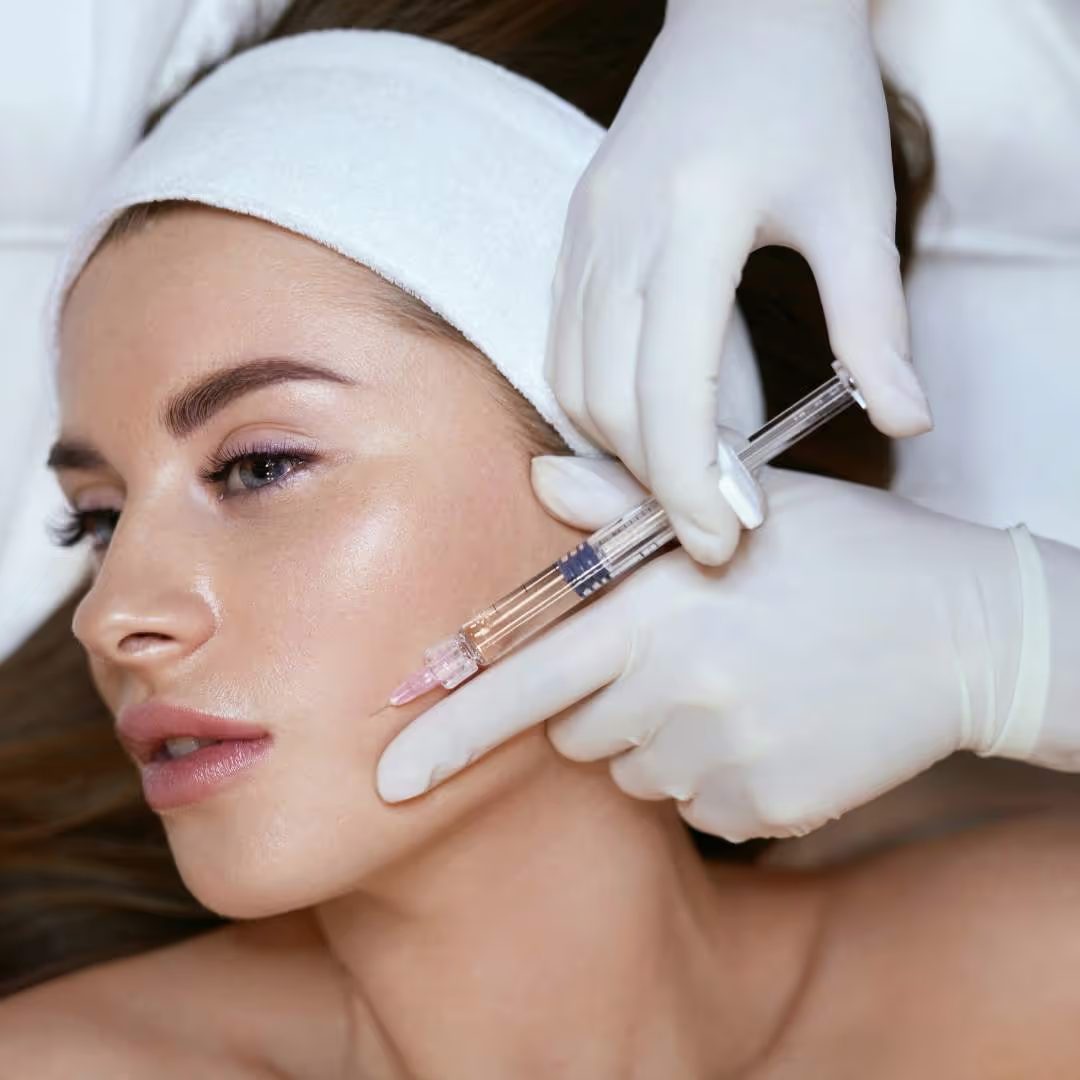

A regenerative injectable treatment designed to strengthen, hydrate and revitalise the delicate eye area.

From £350

30 minutes
Approximately 6–9 months
Mild

Minimal, mild redness or small injection marks possible
2–3 sessions, spaced several weeks apart
The eye area is one of the most delicate regions of the face and often the first to show signs of ageing. Thinning skin, fine lines, crepiness and reduced elasticity can develop over time, contributing to a tired or aged appearance.
Polynucleotides for eye rejuvenation work by supporting cellular repair and improving skin quality at a deep level. Rather than adding volume or altering structure, this treatment focuses on strengthening the skin, improving hydration and enhancing elasticity.
By restoring skin resilience, polynucleotides help the eye area appear smoother, healthier and more refreshed, without heaviness or distortion.
At Bavary Clinic, treatments around the eyes are approached with exceptional care and precision. We assess skin quality, thickness and movement before recommending polynucleotide therapy.
Injection technique and dosing are carefully tailored to the delicate anatomy of the eye area. Our conservative approach prioritises gradual improvement and long-term tissue health, avoiding overstimulation or excessive intervention.
This regenerative approach allows the skin to strengthen naturally, creating subtle yet meaningful improvement over time.
Your appointment includes a comprehensive consultation, clinical photography and a personalised treatment plan. The procedure itself is typically well tolerated, with fine needles used to minimise discomfort.
Mild redness or small injection marks may be visible immediately after treatment and generally settle within a short period. There is minimal downtime, and most clients return to normal activities the same day.
A course of treatments is usually recommended to achieve optimal improvement and maintain results.
Over the weeks following treatment, the eye area appears smoother, more hydrated and more resilient. Fine lines soften, skin texture improves and the overall appearance becomes brighter and more rested.
Results typically last between six and nine months. With ongoing maintenance, polynucleotides can support long-term improvement in eye-area skin quality and resilience.
Polynucleotides, essentially, are long chains of nucleotides, which are the basic structural units of nucleic acids like DNA and RNA. Each nucleotide consists of three components: a sugar molecule, a phosphate group, and a nitrogenous base. When these nucleotides are linked together, they form a chain - the polynucleotide - which can act as a blueprint for biological processes or play a role in various cellular functions.
The application of polynucleotides in skin rejuvenation leverages their biological properties to stimulate and enhance the skin's natural healing and regenerative processes. When introduced into the skin, particularly the delicate areas targeted in eye and face rejuvenation treatments, polynucleotides initiate a cascade of cellular events. One of their primary actions is to stimulate the production of collagen and elastin, two proteins that are vital for the skin's structure and elasticity. Collagen, the most abundant protein in the skin, provides the framework that supports the skin's physical structure. Elastin, on the other hand, gives the skin its ability to return to its original shape after being stretched or contracted.
The sensation experienced during the Polynucleotides Eye and Face Rejuvenation treatment can vary from person to person, with most describing it as a mild prickling or stinging sensation. This sensation is typically brief and manageable, thanks to the meticulous techniques employed by experienced practitioners and the use of fine needles specifically designed for such delicate procedures. These needles are so thin that they cause minimal disruption to the skin, significantly reducing any discomfort that might be experienced during the injection process.
Furthermore, to enhance patient comfort, a local anaesthetic is often applied to the treatment area before the procedure begins. This anaesthetic works by numbing the skin, thereby reducing or completely alleviating any pain that could be felt during the injection of polynucleotides. The use of anaesthetics is a standard practice in aesthetic treatments and is highly effective in ensuring a pain-free experience for the patient.
The Polynucleotides Eye and Face Rejuvenation treatment doesn't offer instant results. Unlike some aesthetic treatments that provide immediate changes, the effects of polynucleotides unfold over time, reflecting the natural regenerative processes they initiate within the skin. After the treatment, the polynucleotides begin to work at the cellular level, stimulating the production of collagen and elastin, two vital proteins responsible for the skin's elasticity and firmness. This process does not occur overnight but gradually, as the body takes time to generate these proteins and integrate them into the skin's structure.
Typically, patients may start to notice improvements in their skin's texture and elasticity a few weeks following the treatment. These initial changes are often subtle, with the skin appearing more hydrated and radiant. Over the ensuing weeks and months, these improvements become more pronounced as the increased collagen and elastin levels begin to counteract the signs of ageing, such as fine lines, wrinkles, and loss of firmness.
Following the Polynucleotides Eye and Face Rejuvenation treatment, patients generally experience minimal to no downtime, a significant advantage over more invasive cosmetic procedures. This means that most individuals can return to their regular activities almost immediately after the treatment, which is particularly appealing for those with busy schedules or who cannot afford extended recovery periods.
However, it's important to note that while the treatment allows for a quick return to everyday life, there might be minor, temporary side effects. Commonly, patients may observe slight redness, swelling, or bruising at the injection sites. These are typical responses and should not cause alarm as they indicate the body's natural healing process in action. Such side effects are usually mild and subside within a few days. The extent of these reactions can vary based on individual sensitivity and the specific areas treated, with some people experiencing more noticeable symptoms than others.
With locations in Harrow, London and Sligo, Bavary Clinic is dedicated to advanced aesthetic and skin health treatments grounded in precision, safety and personalised care. Our practitioner-led clinics combine medical expertise with a refined aesthetic philosophy focused on natural, harmonious results.
Whether visiting our London flagship or our boutique Sligo clinic, clients can expect a discreet, considered experience. We prioritise skin integrity, structural balance and long-term rejuvenation, blending science with artistry to enhance — never alter — your natural features.
Every treatment is guided by evidence-based medicine and tailored to individual anatomy and goals. From regenerative skin therapies to advanced cosmetic procedures, our approach is deliberate, measured and results-driven.
At Bavary Clinic, refinement is not about transformation — it is about restoring confidence through intelligent, understated enhancement.
.jpg)
Discover what our patients have to say about our clinic, practitioners and treatments.